What will the light be used for?
Start with the job the light needs to do. A headlight, an off-road work light and an interior bulb have different installation and performance priorities. Specify the vehicle type, intended use, operating environment and target market before comparing products. That gives your supplier a useful starting point for recommending a range, rather than a collection of bulbs that happen to look similar.
For a mixed catalog, separate your requirements into LED headlights, work lights, light bars and small automotive bulbs.
Does the exact model fit the installation?
A socket designation is only part of the fitment check. Share the vehicle make, model and year, along with the bulb base, available installation space, connector and electrical requirements. For headlights, include the housing type and clearance around the cooling assembly. For auxiliary lights, confirm the mounting position, bracket, wiring and the space available.
Ask to evaluate the exact model you intend to order. A sample checked in the intended installation provides more useful information than a fitment assumption based on a product photograph.
How are the performance figures measured?
Ask whether the quoted power and light output apply to one bulb or a pair. Request the measurement conditions, including supply voltage, operating time and ambient temperature. Agree on the color-temperature option and request a specification sheet for the selected model.
When evaluating a headlight, review the beam in the intended lamp assembly as well as the bulb’s output figures. Record sample results under consistent conditions so your purchasing team can compare models on a like-for-like basis.
How Does Cooling Work?
Review the complete cooling arrangement, including the heat-transfer path, heat sink and fan where fitted. Ask what installation conditions the design was evaluated in, and whether the available space and airflow match your application.
Request readings after the sample has operated for an agreed period, rather than relying only on an initial reading. Include electrical behavior, physical clearance and any fan noise in your sample checklist. This creates a practical conversation about the installation you will actually sell.
What is checked before shipment?
Ask how the manufacturer organizes production and inspection, what testing applies to your chosen model, and what records can accompany an order. Useful topics include aging, optical measurements, vibration, waterproofing, dust resistance and salt-spray testing where relevant to the product.
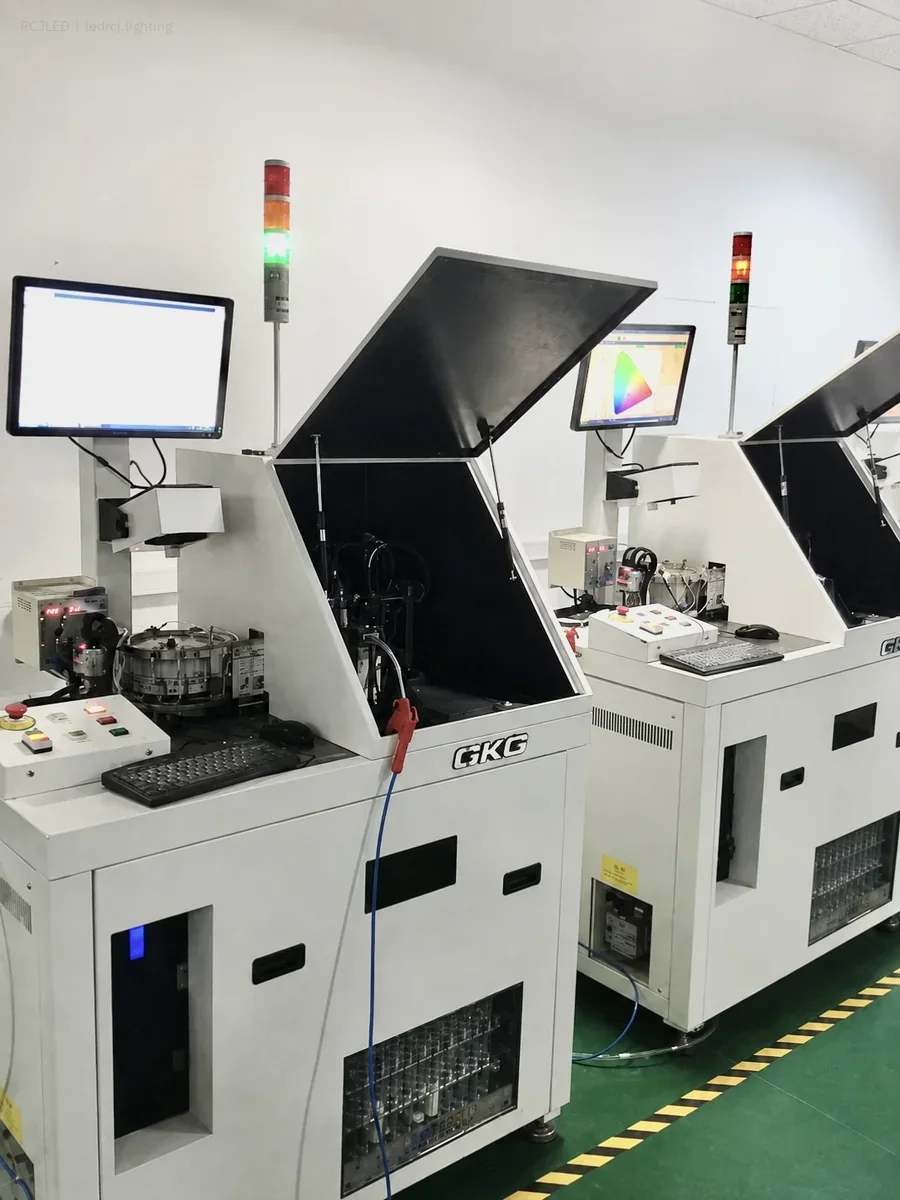
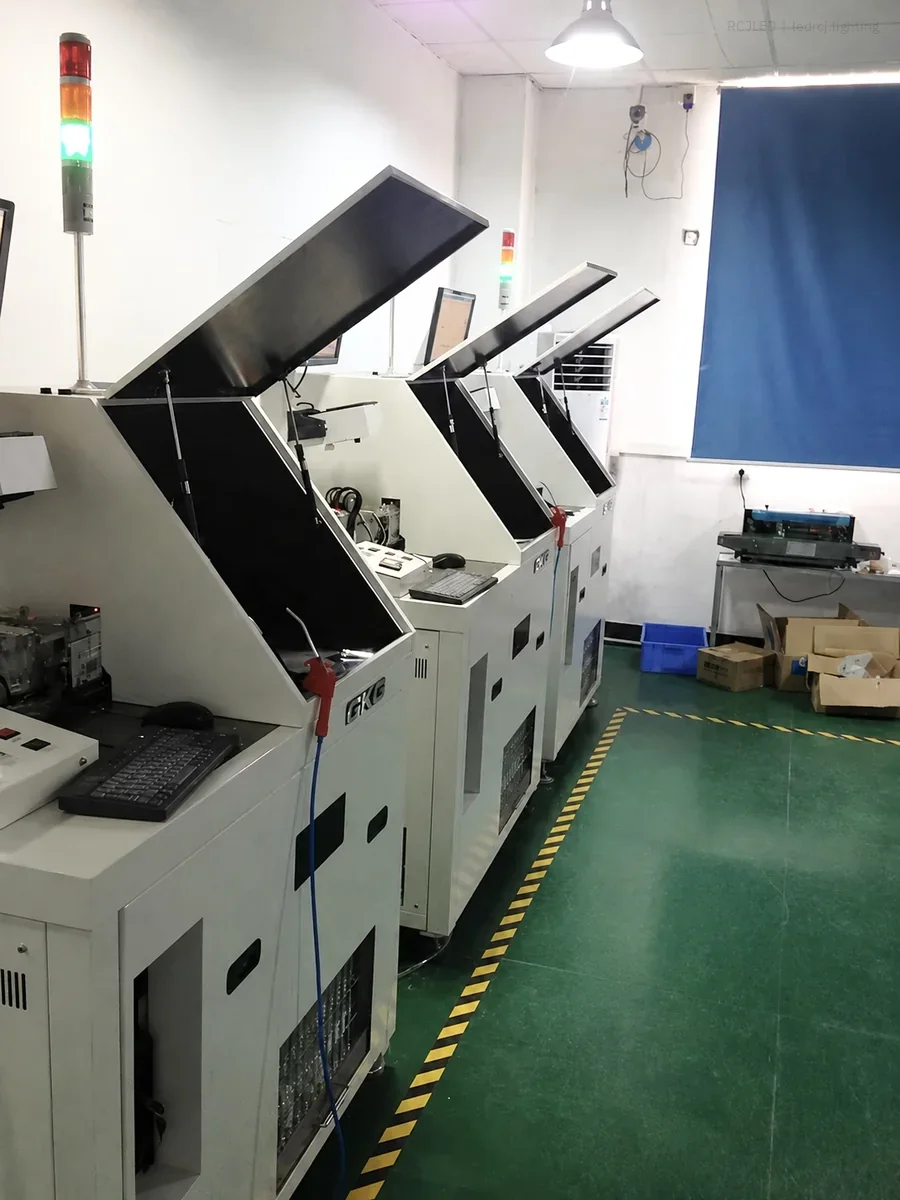
At RCJLED, our LED bulb production process covers SMT, assembly, soldering, tinning, QC testing and packaging. Dedicated QC teams support our production lines, and every item undergoes aging testing and full inspection before shipment. You can explore our factory and equipment to see the people and facilities behind the process.
What does the OEM / ODM project include?
Define the scope of customization before requesting a final quotation. Separate product development, branding, packaging design, labels, instructions and sales content into clear deliverables. Confirm which options are available for the exact model, what must be approved at the sample stage and which details will appear on the final order.
Established in 2011, RCJLED brings 15+ years of professional OEM/ODM experience to automotive LED lighting projects. Our support includes product and packaging design, photography and video content. Discuss your OEM / ODM brief with our team, including quantity, target market and delivery requirements.
Which requirements apply in the destination market?
Confirm the product’s intended use and the requirements that apply to its destination, vehicle application and installation. Request model-specific documentation and check the scope of any test report or approval.
For official background, the United States’ FMVSS No. 108 addresses lamps, reflective devices and associated equipment. UN Regulation No. 149 addresses road illumination devices. Consult the applicable rules and current amendments for your project; a familiar socket or a general product label does not establish that a particular installation meets them.
Your first inquiry, made clearer.
Prepare a short brief with your product category, vehicle application, bulb socket or mounting requirements, destination market, quantity, branding preferences and delivery schedule. Attach the product link and sample requirements so the supplier can respond to the exact project.
Explore our automotive LED product range, then contact RCJLED Sales for a model recommendation, samples and quotation.