
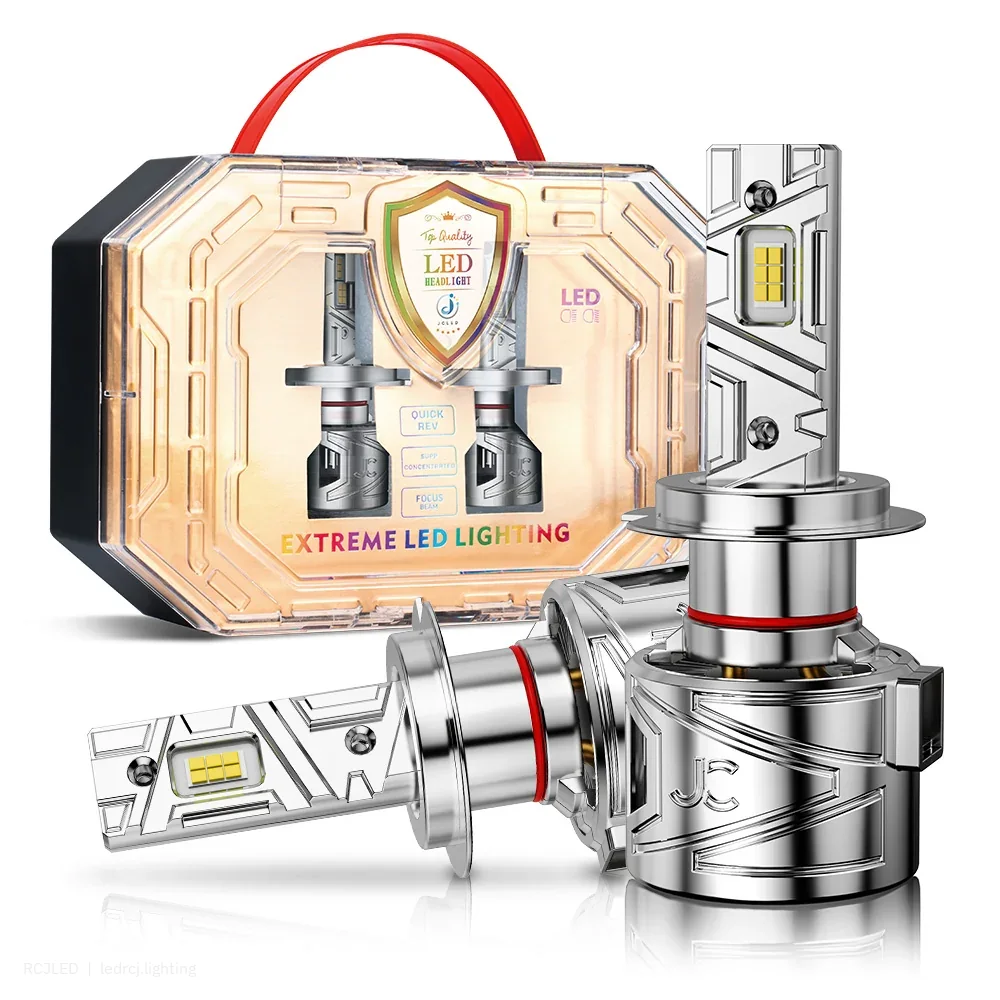
H1, H4, H7, H11, 9005 and 9006 are distinct lamp categories. A matching category starts the selection process; it does not establish complete LED compatibility. For wholesale buyers, the practical unit of selection is a documented vehicle application and a confirmed product variant.
This guide explains how to turn a socket request into a clear specification for an automotive LED headlight order, with examples from RCJLED’s current product range.
Compare The Socket Types
Start with the marking on the original bulb and the vehicle manufacturer’s parts information. Keep the original bulb available for reference when requesting a sample.
| Bulb category | Base designation | What to record in the purchase specification |
|---|---|---|
| H1 | P14.5s | Exact application, connector arrangement and retaining hardware |
| H4 | P43t | Both low-beam and high-beam operation, plus retention and orientation |
| H7 | PX26d | Intended light function, bulb holder and any required adapter |
| H11 | PGJ19-2 | Socket keying, sealing interface and rear clearance |
| 9005 / HB3 | P20d | Correct keyed base and intended headlamp function |
| 9006 / HB4 | P22d | Correct keyed base and intended headlamp function |
The category, alias and base relationships above come from the OSRAM ORIGINAL LINE technical product table. The purchasing checks in the final column are our recommended order-record fields. The table identifies conventional lamp interfaces, not approvals or performance specifications for RCJLED products.
H4 and H7 also differ in operation. A conventional H4 halogen bulb contains separate low-beam and high-beam filaments; H7 contains one filament and serves a selected function within the headlamp system. An H4 LED replacement therefore needs its intended dual-function operation checked, rather than being treated as a different label on an H7 product. HELLA explains these H4 and H7 arrangements.
Build A Fitment Record
Before requesting a wholesale quotation, collect six pieces of information:
- Vehicle identity: brand, model, model year, trim or generation, and destination market.
- Headlamp identity: original bulb marking, headlamp part number or approval number where available, and clear photographs.
- Required function: low beam, high beam, combined low/high, or another specified application.
- Physical constraints: mounting arrangement, retaining clip, cap opening and available rear space.
- Electrical requirements: vehicle supply and the product variant’s documented operating range, plus any known bulb-monitoring behavior.
- Order details: quantities by socket, sample requirements, packaging and label language.
Ask the installer to photograph the connector and holder separately. A picture of the vehicle’s front end rarely answers the mounting question. For repeat orders, attach the approved sample reference to this record so a familiar model name does not replace the confirmed specification.
As an example of how detailed compatibility records can become, OSRAM’s LEDriving Vehicle Finder separates vehicle versions, years, light functions, headlamp references and installation accessories. That tool concerns OSRAM products; its results do not establish fitment or road approval for another manufacturer’s lamps.
Test The Complete Installation
Use a sample of the exact proposed socket variant before committing to a larger order. Our suggested acceptance sequence is to seat and secure the bulb, reconnect the wiring, check cap closure and then operate the required lighting functions.
Document whether the driver and cooling structure have enough space in the completed installation. Record cable routing and adapter part numbers. Do not accept a sample solely because it can be pushed into the opening while the retaining clip or rear cover remains disconnected.
Then assess beam distribution and aim with suitable workshop equipment in the intended headlamp. Record the vehicle and headlamp used, operating voltage, test conditions and any dashboard warnings or flicker. Keep installation fit, electrical behavior and optical results as separate acceptance fields so a successful check in one area cannot conceal a failure in another.
For products intended for road use, request the applicable documentation for the exact product and destination market. A socket label or a generic test-report cover should not be treated as evidence that a particular installation is approved.
Shortlist Actual RCJLED Variants
The RCJLED LED headlight catalog provides starting points for a sample discussion:
- JC-100W: the current listing identifies H4, H7, H11, 9005 and 9006 options. Specify the individual socket required when discussing the JC flagship range.
- S7 Fanless LED Headlight: the listing identifies H1, H3, H4, H7 and H11 options with a braided copper-strip cooling design. Confirm the installation envelope of the chosen variant.
- F7 Mini LED Headlight: the listing identifies H7 and a Canbus version. Treat the electrical feature as a starting point for vehicle testing, not a promise covering every H7 installation.
These examples reflect published model and option descriptions. Final dimensions, operating conditions and availability should be confirmed in the quotation and sample record.
When comparing performance, distinguish a listing value from a measurement you can evaluate. Ask whether watts and lumens are stated per bulb or per pair, how the value was measured, and whether the reading represents initial output or stabilized operation. Keep those answers alongside the socket variant. Do not compare two headline numbers that describe different quantities or conditions.
Keep The Order Traceable
For an OEM or private-label order, make the confirmed socket part of the SKU, carton label and packing list. Separate H4, H7 and other variants in the order breakdown, even when they share a product family name or packaging design. Agree which installation accessories belong in each box.
Send your vehicle list, bulb and holder photographs, target market and quantities to Contact Sales. Our team can use that brief to discuss suitable RCJLED variants. For the wider purchasing process, see our automotive lighting sourcing checklist.
Common Buyer Questions
Are H4 And H7 Interchangeable?
Do not specify them interchangeably. They have different base designations and different conventional operating arrangements. Order the category required by the headlamp and validate the proposed LED variant in that application.
Are 9005 And HB3 Different Names?
OSRAM’s technical table lists product 9005 under category HB3. It lists 9006 separately under HB4, with a different base. Preserve both the commercial name and category in your order record.
Does An H7 Label Guarantee Fitment?
No. Confirm the holder, retaining hardware, rear clearance, light function and electrical behavior for the exact vehicle and headlamp. Keep the approved sample and installation record available for production checks.
Does Canbus Mean Every Vehicle Will Work?
Do not read it as a universal fitment guarantee. Ask which variant and application were tested, then record warning messages, flicker and operating behavior during your own sample acceptance.
What Should I Send For A Socket Quotation?
Provide vehicle details, original bulb marking, connector and holder photographs, required function, target market and quantities by socket. Add any packaging, logo or accessory requirements for an OEM order.