
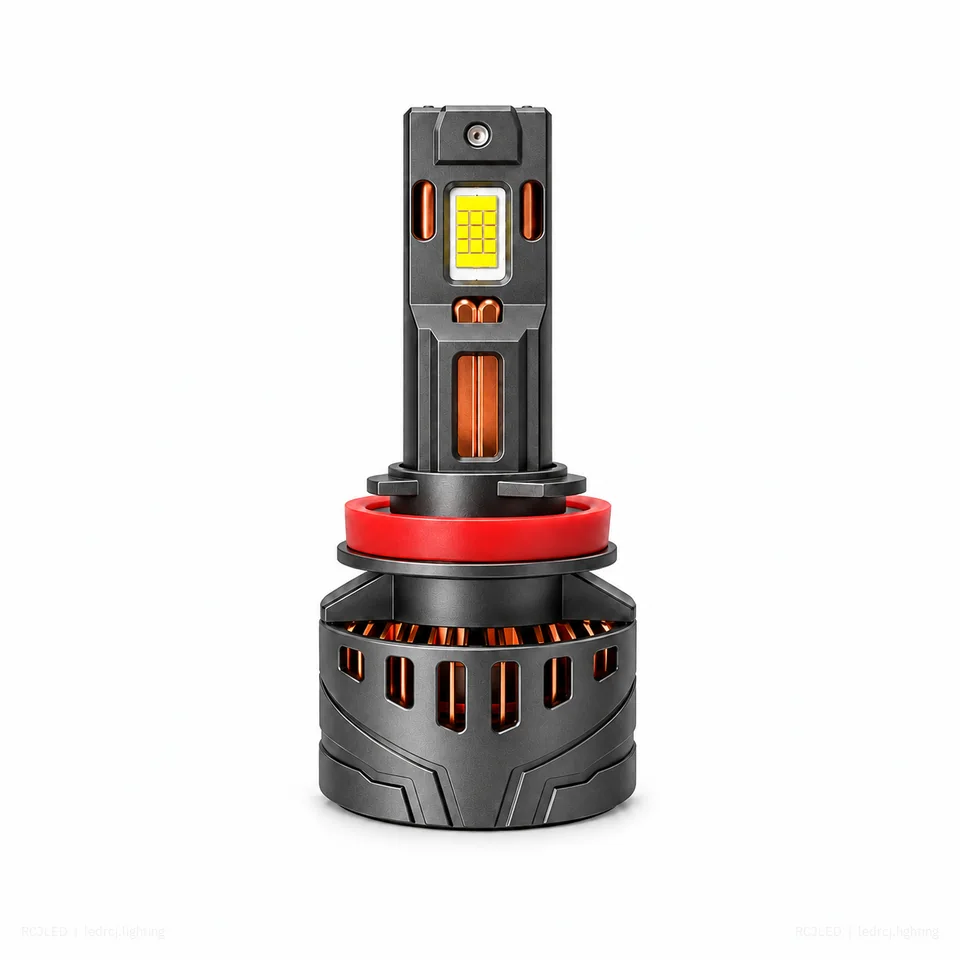
What Should a Buyer Approve?
Before a bulk order, approve an identified LED headlight bulb in a defined installation, with recorded electrical conditions, warm-running observations, beam evidence and a retained reference sample. Put the accepted configuration and any unresolved points on the purchase order.
A loose bulb lighting up on a desk answers one question: does this sample switch on? It does not settle whether the rear cover closes, whether output changes as the bulb warms, or whether the next shipment will use the same driver.
For an importer or private-label brand, the useful outcome is a repeatable purchasing record. This guide proposes that record for replacement headlight bulbs. Agree the test method and acceptance limits with your supplier and, where needed, a qualified installer or laboratory before testing begins.
1. Identify the Sample Before Testing
Give each sample an identifier that stays with its photographs, measurements and decision. Record the model, socket option, LED source, driver revision if available, connector and any separate adapter. Photograph the product and packaging labels.
Choose representative applications from the vehicles your customers actually service. “H7 fits” is too broad for an approval record: include the vehicle year and lighting configuration, the headlamp identifier where available, and whether the bulb is for low or high beam.
OSRAM’s vehicle finder shows how one manufacturer distinguishes vehicle years, lamp functions, headlamp references and accessories. Its entries concern OSRAM products; use that level of detail as a prompt for your own records, rather than treating the list as RCJLED compatibility evidence.
Start with the headlight socket guide if your buying list still mixes base types. Record untested combinations separately.
2. Check the Complete Installation
Have a qualified installer check seating, retention, connector engagement, cable routing and the space behind the headlamp. The bulb should be evaluated with the intended cover and accessories, following the installation instructions.
A successful open-cover demonstration is not the same configuration as a finished installation. Photograph the retaining mechanism and closed-cover arrangement. If a driver, adapter or replacement cap is required, identify it in the sample record and quotation.
Keep mechanical fit separate from vehicle electrical behaviour. Record startup, relevant lighting modes, visible flicker and dashboard messages. For electrical compatibility questions, use the Canbus wholesale guide; do not translate one successful vehicle test into an “all cars” claim.
3. Compare Output Under Matched Conditions
Ask for both initial and warm-running measurements under the same documented method. Record the actual voltage at the bulb, current, ambient conditions, elapsed time and installation arrangement. Agree a stabilisation criterion and observation period; there is no single warm-up time in this checklist that certifies every bulb.
Cooling deserves a purchasing check because LEDs are sensitive to operating temperature. ENERGY STAR explains the general relationship between heat, light degradation and useful life. That guidance is about LED technology; it is not a certification of the automotive bulbs discussed here.
A photograph of copper pipes or a large fan is useful construction information, but it does not measure sustained output. Compare candidates in the same intended installation and ask the supplier to explain any output reduction, cycling or shutdown observed during the agreed test.
| Field | What to specify |
|---|---|
| Electrical input | Voltage measured at the bulb and current; operating mode; input power basis. |
| Quantity basis | One bulb or a pair for every watt and lumen claim. Do not infer one from the carton quantity. |
| Timing and environment | Initial reading, elapsed time, agreed stable reading, ambient temperature and cover arrangement. |
| Optical method | Instrument and setup; distinguish total luminous flux in lumens from illuminance in lux at a stated point. |
| Evidence | Dated report linked to the sample ID, with the same method used for all compared candidates. |
A single lux reading is not total lumen output. A startup value is not a warm-running result. If a quotation leaves the basis unclear, resolve it before comparing price per pair. Our lumens versus watts guide covers those distinctions in more detail.
4. Evaluate the Beam in the Intended Headlamp
Request beam evidence for the actual bulb-and-headlamp combination. For comparative photographs, keep the vehicle position, aiming procedure, distance, camera exposure and surrounding conditions consistent. A brighter-looking photograph taken with different camera settings is weak purchasing evidence.
Record the observed distribution, low-beam boundary where applicable, unwanted light and changes between lighting modes. Have aiming and interpretation handled by someone qualified for the installation. Keep comparison photographs with the measurements rather than approving a bulb from a promotional road image.
A workshop comparison helps screen candidates. It does not by itself establish road-use approval. Before offering a range in a destination market, request the applicable documentation for the exact product and intended use and have its scope checked. Keep that decision separate from the commercial sample sign-off.
5. Write the Decision, Including Open Issues
Use a short acceptance sheet that another buyer can follow later. Enter the agreed requirement before adding the result. A blank field means unresolved, not passed.
| Check | Evidence to retain | Decision to record |
|---|---|---|
| Identity | Model, socket, revision, labels and sample photographs. | Exact approved configuration. |
| Installation | Headlamp reference, retention, wiring, cover and accessory photographs. | Pass / fail / unresolved against agreed fit requirements. |
| Electrical behaviour | Vehicle and lighting modes; warning or flicker record; accessories fitted. | Accepted applications and known exclusions. |
| Warm-running behaviour | Matched setup, timed input and optical readings, observations. | Result against the agreed limits and method. |
| Beam | Setup, aiming record and comparable photographs or laboratory report. | Review result and any further testing needed. |
| Order readiness | Approved artwork, unit quantity, model labels and packing specification. | Version and date authorised for the order. |
| Release | Reviewer, supplier acknowledgement, exceptions and retained reference ID. | Approved / conditional / rejected; action owner and due date. |
For example, a bulb may pass the selected installation check while its warm-running report is still outstanding. Mark the approval conditional and name the missing evidence. Do not let a sample marked “OK” silently authorise an unresolved specification.
6. Make the Approved Sample Relevant to the Shipment
Keep an approved reference sample with the signed specification. Identify that reference on the purchase order, together with the socket mix, quantities, accessories, packaging version and permitted substitutions, if any.
Agree which component changes need notification and another review. A change to the LED source, driver, thermal structure or connector may affect what was originally evaluated. Similar housing colour is not evidence of an unchanged build.
Define the pre-shipment inspection scope, sampling plan, defect categories and response to a failed check in writing. The number of samples and acceptance limits should reflect the order and agreed risk; this article does not prescribe a universal inspection level.
For a private-label range, approve carton artwork and installation information alongside the hardware. Keep performance claims traceable to supporting evidence. Confirm warranty coverage, required claim records and remedies in the commercial terms rather than treating a listed service-life figure as a warranty.
Build a Shortlist for a Sample Enquiry
The X10, X11 and X12 Mini pages provide current RCJLED catalogue references for a sample discussion. Ask Sales to confirm the available socket variants, supporting reports and commercial terms for your target market.
Keep the first comparison manageable: select the applications that matter to your distribution business, then use the same approval sheet for each candidate. For a wider range, browse LED headlight bulbs or discuss OEM / ODM requirements.
Questions from Wholesale Buyers
How many LED headlight samples should an importer request?
Agree enough samples to cover the selected socket and vehicle configurations, repeat observations and a retained reference. There is no universal quantity that validates an entire range; ask for a plan matched to the intended order.
Is a 30-minute test enough to approve a bulb?
Elapsed time alone is not an acceptance criterion. Agree the setup, stabilisation criterion and observations to record. A short screening test also does not verify a long service-life claim.
Can one approved H7 sample cover every H7 vehicle?
No. Keep the tested vehicle, headlamp, bulb revision and accessory combination in the record. Additional applications need their own supporting evidence.
What should a brand send with a sample request?
Send company details, destination market, product links, socket mix, quantities, representative applications and packaging requirements. Include the proposed approval checks so the quotation covers the evidence you need.
Request Samples with an Approval Brief
Send this brief to RCJLED Sales for an LED headlight wholesale or private-label enquiry. Ask for confirmation of current sample availability, MOQ, lead time and the evidence available for each selected configuration.
Company / website / business type:
Destination market and intended use:
Product links and socket mix:
Representative vehicles and headlamp references:
Sample quantity and initial order quantity by item:
Expected repeat-order volume:
Required accessories and packaging:
Agreed test method and acceptance requirements:
Reports or approval documents requested:
Target approval date and delivery schedule:
Technical References and Scope
The checklist is an RCJLED purchasing guide, not a laboratory test report. The references support general technical context; neither establishes RCJLED product certification or measured performance.